
June 19, 2025
Article highlights:
- My first spiritual teacher
- What longing in me attracted me to his teachings?
- Hu’Mata, Hu’Ukta, Hu’Varshta
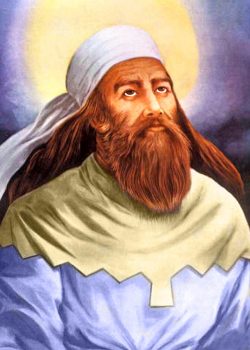 Initially, as I began to embark on a more “alternative” spiritual path, it was inner guidance, books and friends and associates that provided encouragement. It was a while before I came across someone that was offering alternative spiritual teachings and oddly, it hadn’t occurred to me to seek that previously.
I think I’ve mentioned to you here that when I did finally meet a spiritual teacher, it was — surprisingly to me — a channel called Zarathustra. Channeling was out of my comfort zone then, but it came about in a way that allowed me to observe over time. What I saw moved me beyond my old religious programming about it. And as time went along I’d say that this was the most impeccable spiritual teacher I’ve ever encountered.
This channel didn’t want to amass a large following, groups were kept small. He quietly offered simple but extraordinary training for how to comport oneself on a spiritual path and how to navigate the pitfalls. The teachings primarily included basic tenets about the truth of our being and the necessity of having one’s own relationship with the One Life that flows through all life.
Discussion often centered around the problems and opportunities of being human. They included instruction about the truth of who we are, the magnificence of our spiritual heritage. We learned of the nature of the in-dwelling Light and how to brighten and maintain it — and other things such as these.
Zarathustra was, apparently, an Iranian prophet or mystic who was very long-lived, probably in the period of 600 years leading up to Jesus’ coming. He is referenced in many ancient scriptures and writings of that area and time. He is said to have been one of the so-called 3 wise men who attended the birth of Jesus.
He is mentioned and documented by many historians and spiritual leaders of the time and poets such as Hafiz, and is said to have lived in that area as a prophet and sage. However, very few of the details of his birth, life and teachings are known today.
Zarathustra, as a modern day channel, said he had lived and taught then in such a way as to prevent a cult or religion from rising up around him and he didn’t encourage us to research the happenings and beliefs from that previous lifetime, but to focus on our paths in this life. He said his focus now was on teachings that awaken the teachers of these times, to remind them of who they are.
There was one teaching he returned to often — it was the idea of one’s thoughts, words and deeds being unified and aligned with good. One of his oft-repeated phrases was, “Let your every thought, word and action carry your most aligned intentions into your world in every moment you possibly can.”
He was realistic about that being an ideal, and said it was not something to harangue one’s self about. But at the same time he was also beautifully encouraging that we each were capable of living that to a greater and greater degree in our lives as we progress spiritually. He said in times of old this was called ‘The Pathway of Truth’.
During the period I was in my storage shed last week, I was in the process of writing this, thinking about my first teacher and wondering who your first teachers were when a serendipitous moment occurred. Going through a box of books I came upon a tiny booklet, about 2.5×3 inches, called Thus Spake Zarathushtra.
I was delighted to see that this teensie book explains the two main teachings of Zarathushtra of old and gives as the main focus the belief in Ahura Mazda, the Source of all life. It cites as the secondary tenet of his teachings a principle Zarathushtra apparently referred to as the Holy Triad. The Holy Triad is not the so- called trinity of modern Christendom. It is:
Hu’Mata — Righteous Thoughts
Hu’Ukta — Righteous Words
Hu’Varshta — Righteous Deeds
So there in the storage shed, I came across this affirmation of what Zarathushtra had in fact returned us to time and again — The Path of Truth, marked by our willingness to become aware of the importance and power of our every word, thought and action.
The two simple tenets of Zarathustra seem to have been important to me since I was very young: my relationship with the Source of Life and the importance of my thoughts and words. No wonder they were part of the teachings of my first spiritual teacher this time around. They were key longings that led me to those teachings.
As you reflect upon your own spiritual path — when, how and with whom it began — what were the teachings that answered your own longings for spiritual satisfaction?
Which teachings would you say were most core to you — perhaps already embedded in your being in such a way as to cause you to search for and recognize them in your teachers as you entered upon your own pilgrim’s progress?
Something interesting to muse on today 😊
With much love,
💗 Mayet
