
 Imagine for a minute that I walk up to you, placing my hands on your shoulders and begin to push against you. Besides surprise, what is your likely response? Most of us shift our posture to brace ourselves and then push forward to keep from losing our balance, right?
This becomes a learned pattern – brace and resist. For some this is a vital survival pattern learned in childhood to avoid being controlled or overrun and it becomes very ingrained. That might be you.
Even if not, most of us still pick up this skill because life so often seems to be pushing at us and we feel the need to resist so we don’t lose balance. We brace ourselves and lean into it.
Now imagine again that I am still forcefully pushing against you, pushing down, and you are braced and resisting. Feel what that’s like in your body:
You set your stance, locking it in.
You set your hips and knees, perhaps crouch slightly,
You lean forward with your shoulders, your neck and back straining.
You pull your core energy into your solar plexus to give strength to both your stance and your upper torso so you don’t fall back, or lose ground, so you aren’t brought to your knees.
In fact as the pusher, I’m doing the same thing. I’m bracing to keep the pressure on. Whether we are more typically the pusher or the resister doesn’t matter, we are usually both at times. But as you know, doing this is fatiguing. Bracing drains the energy we’ve rallied to our core. We also must shield ourselves to conserve energy.
This creates a closed and conserving energetic system. Here’s what happens:
we a) focus all our energy in an outward direction
and b) we block all incoming energy with our resistant outward thrust. So while we are expending energy forcefully, we are not replenishing it. Thus the draining is inevitable.
This tendency is usually both instinctual and learned for most of us and it becomes habitual. We brace ourselves when there’s tension with our partner. We brace ourselves for problems at work. We brace when we anticipate trouble with a friend or family member… or with others that we come into contact with day-to-day.
We probably even brace ourselves in more simple on-going circumstances such as meeting someone new, getting ready to run errands, etc. We brace ourselves in illness, for challenges. And for two years we have been braced for a pandemic.
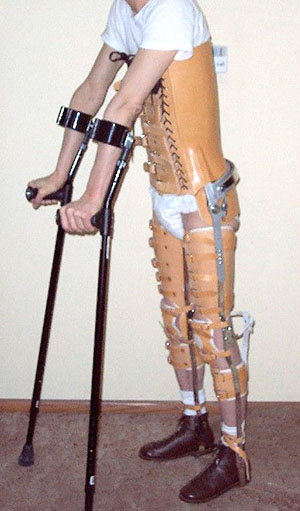
Imagine yourself now with braces that go from mid-chest to toe. They are energetic braces of course, but they have similar effects to wearing actual full-body braces for an extended time.
If they are necessary they may be painful and cumbersome but they allow us to walk and function which is desirable and important. They do have drawbacks and limitations however.
If they are not necessary – or when they become no longer necessary – we feel worried and unstable without them and may chose instead to keep the braces and adjust to the limitations. This happens because an unconscious belief develops that bracing keeps us safe, balanced, strong and active. So we keep bracing despite the limitations. Most of us made this choice unconsciously.
Learning not to constantly brace is exceptionally freeing:
Our personal powerhouse of energy becomes available for other uses in our life.
We come into a whole new relationship with incoming energy and can receive like never before.
Giving to others changes also.
The many benefits of not bracing constantly are in fact rather extraordinary.
Learning not to constantly brace is an art, but it’s an easy one to master. It’s one that when observed brings options and strengths such as knowing how to simply step aside. We learn the perplexing safety of surrender. We open our energy pathways to greater health and this improves hip, knee, ankle, feet, leg and spine problems, and eases digestion. We begin to restructure physically and energetically.
It’s a simple thing to change. Merely notice when you are bracing yourself. That’s all. When you do, it’s then nearly automatic to relax your stance realizing it’s not a necessary response.
Relaxing ends the energetic cost of bracing. It’s then easier to think of better responses and solutions such as stepping aside or speaking your truth or just flowing into the situation. There’s such relief when the body no longer has to maintain rigidity. This relief carries ripples into our mind and emotions, freeing many pockets of rigidity there too.
Bracing often caries with it a feeling of dread about the dreaded thing we are bracing for, or against. By not bracing, it becomes possible to stop dreading life! Amazing! The gift of less dread is so worth the effort of noticing.
Imagine being more fluidly upright and ready. Imagine being more effortlessly responsive without bracing for your new project, your next task or necessary action. Imagine that saying (or feeling,) “I’m bracing myself for that,” is a thing of the past.
It’s very fun and freeing to move more and more effortlessly into brace-free living.
Here’s to more relaxed and effortless lives!
~X♥️Mayet

Leave A Comment
You must be logged in to post a comment.