
May 1, 2025
Article highlights:
- Are you single?
- Are you missing out?
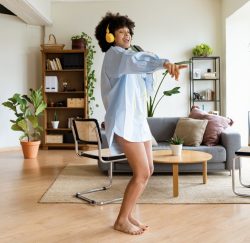 Since we’ve been on the topic of love, let’s answer an important question. If you aren’t coupled up, are your life satisfaction and personal growth stunted?
Today I want to share a few thoughts about living alone, since so many of us now do. I’ll draw from Carl Jung’s writings on women who live alone but I want to add that it surely applies equally to men who live alone. So for the male reader, simply supply your own pronoun as we proceed.
Carl Jung wrote in a very positive way about the woman who chooses to live alone. He felt that “a woman’s solitude [can be seen] as a crucible for transformation. Beneath the surface of this choice lies a confrontation with her inner masculine, her animus, as well as the integration with her shadow and the ultimate journey toward individuation, becoming whole with or without a partner.
…The woman living alone must then embody the qualities she might seek in a partner — decisiveness, self-reliance and inner-authority.” (Note: For a man, solitude triggers his inner anima —his feminine aspect — with it’s qualities such as softness, vulnerability, nurture and so forth. It was Jung who first introduced the concept of the inner masculine and feminine into modern thought.)
He suggested a single woman who consciously activates her animus rather than projecting it on her partner steps into a more authentic version of herself. The question becomes not, Why is she alone, but What is she becoming?
Jung felt when a woman lives alone she meets not only her feminine but also her masculine animus, engaging it from a place of wholeness, thus activating both the masculine and feminine within as well as without. He felt this was most easily and most likely done when not with a male partner.
For a woman living alone, Jung felt that solitude becomes the alchemical container for this transformation. Without the constant presence of another to reflect back an identity, she is forced to confront the most fundamental question, Who am I, most truly, most fully, when no one is watching?
In such a space, the distractions are fewer and the journey inward is more active. The woman learns to rely on her own voice, to validate her own existence and to cultivate a relationship with herself that no external bond can replace. As well, one’s shadow is more unavoidable in solitude without the distraction of another’s continuous presence.
In these and other ways, living singly becomes more than a lifestyle… it becomes an initiatory journey. When solitude is thoughtfully and consciously chosen, he felt, it creates a crucible for empowerment.
Of course, the single person shouldn’t be retreating in fear — living solo is not about isolating, perfectionism or self-sufficiency, nor is it about being a hermit. But given good mental health, living alone provides much opportunity.
According to Jung, the opportunity is about becoming compelling and authentic, learning to hold the tension between solitude and connection, independence and vulnerability. And it is about discovering the deepest truth of all, that she is already complete.
Jung has said that, “Living alone isn’t just about not having a partner, it is about the truth so many women quietly live, that solitude can be the very thing that sets them free.” By that he meant the realization of the true self.
Single or solo? Both can be fulfilling ways to live. The attributes Jung specifies are desirable for both women and men whether single or coupled, so it’s good to consider how and if we’re achieving them in our own specific situation.
From the solitude,
Mayet
